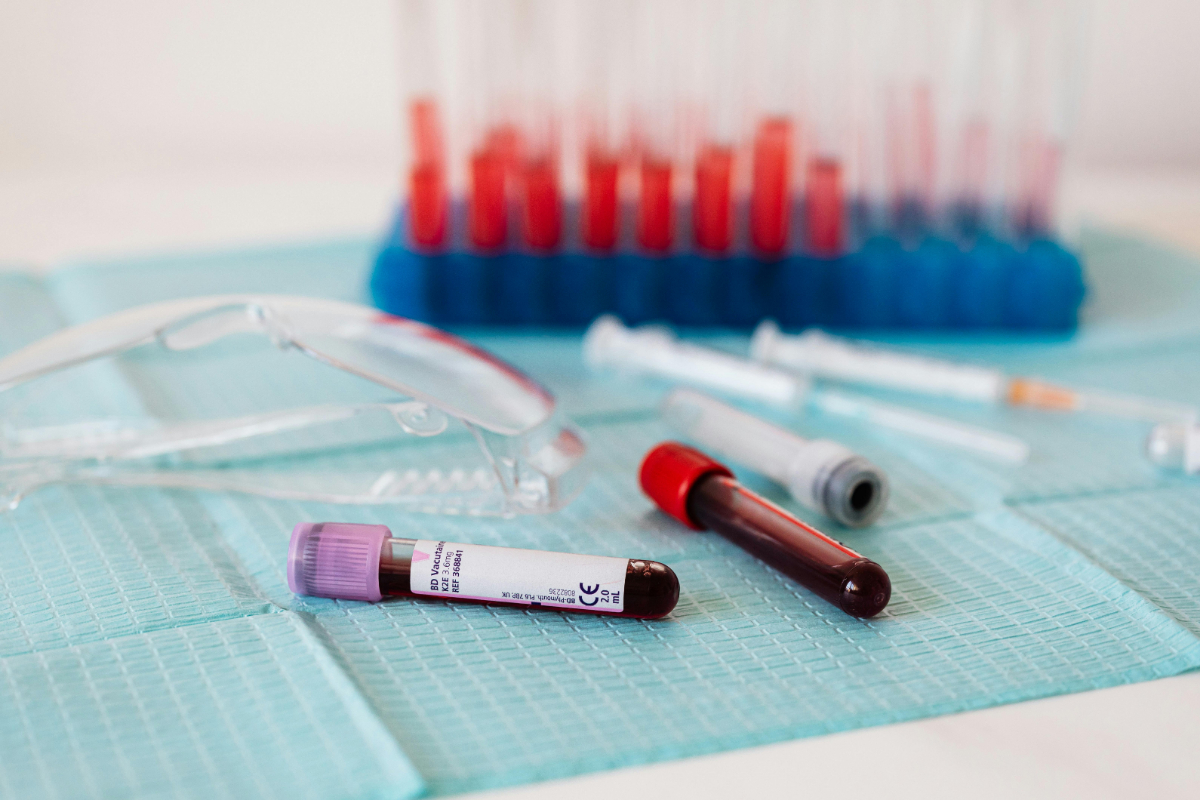
Most people are familiar with the major markers on a complete blood count — hemoglobin, white blood cells, platelets. But tucked between the familiar lines there is often a less-discussed value called reticulocytes. If your doctor ordered a reticulocyte count, it means they want to see how well your bone marrow is doing its job of producing fresh red blood cells.
This guide explains what reticulocytes are, what normal values look like, and what it means when your count is too high or too low.
Disclaimer: This article is for educational purposes only and does not replace professional medical advice. Always consult a qualified healthcare provider for diagnosis and treatment decisions.
What Are Reticulocytes?
Reticulocytes are young, immature red blood cells (RBCs). They are produced in the bone marrow and released into the bloodstream roughly 1-2 days before they fully mature into functional erythrocytes. During those 24-48 hours of circulation, they lose their residual RNA (the mesh-like network visible under special staining — hence the name "reticulocyte") and become standard oxygen-carrying red blood cells.
Because of this lifecycle, the reticulocyte count serves as a real-time window into bone marrow activity. A normal count means the marrow is producing new red blood cells at a steady, appropriate pace. An abnormal count — high or low — tells a very different story.
Why Doctors Order a Reticulocyte Count
A reticulocyte count is not part of a routine CBC at most labs (Quest Diagnostics, LabCorp, Synlab) — it must be specifically requested. Your physician may order it when:
- Diagnosing the type of anemia. Not all anemias are the same. In iron-deficiency or B12-deficiency anemia, the marrow cannot produce enough cells. In hemolytic anemia, the marrow is working overtime to replace cells that are being destroyed. The reticulocyte count separates these two scenarios cleanly.
- Monitoring treatment response. After starting iron supplements, B12 injections, or erythropoietin therapy, a rising reticulocyte count (the "reticulocyte crisis" on days 5-10) is the first sign the treatment is working — often visible before hemoglobin itself improves.
- Evaluating bone marrow recovery. After chemotherapy, radiation therapy, or bone marrow transplant, physicians track reticulocytes to see when the marrow begins producing cells again.
- Investigating unexplained blood loss. If hemoglobin drops but the reticulocyte count is appropriately elevated, it suggests the marrow is healthy and responding to bleeding. If the count stays low, the marrow may be suppressed.
Normal Reticulocyte Count: Reference Ranges
Reticulocyte results are reported in two ways:
- Percentage (%) — the proportion of reticulocytes among all red blood cells.
- Absolute count — the actual number of reticulocytes per unit of blood.
Standard reference ranges for adults (CLSI-aligned):
| Measurement |
Normal Range |
| Reticulocyte percentage |
0.5% - 2.5% (some labs report 0.5 - 1.5%) |
| Absolute reticulocyte count |
25,000 - 125,000 cells/mcL (25 - 125 x 10^9/L) |
Important notes:
- Ranges vary slightly between labs. Always use the reference interval printed on your own lab report.
- Newborns have physiologically higher reticulocyte counts (up to 2-6%) in the first week of life, which decline to adult levels by 2-3 months of age.
- Slight variations by sex exist: some reference tables cite slightly higher upper limits for females of reproductive age due to physiological compensation for menstrual blood loss.
The Reticulocyte Production Index (RPI)
A raw reticulocyte percentage can be misleading when hemoglobin is low. If half your red blood cells are gone (severe anemia), even a "normal" reticulocyte percentage might actually represent an inadequate bone marrow response — there are simply fewer total cells to compare against.
To correct for this, hematologists calculate the reticulocyte production index (RPI), sometimes called the corrected reticulocyte count. The formula adjusts for:
- The patient's actual hematocrit compared to a normal hematocrit.
- The maturation time of reticulocytes in the bloodstream (which increases as anemia worsens, because immature cells are released earlier).
How to interpret the RPI:
- RPI above 2.0 — the bone marrow is responding appropriately. This is the expected pattern after acute blood loss or in hemolytic anemia where cells are being destroyed but the marrow is healthy.
- RPI below 2.0 — the bone marrow response is inadequate. The marrow is not keeping up. This points toward production-failure anemias: iron deficiency, B12/folate deficiency, aplastic anemia, or marrow infiltration.
The RPI is especially useful for distinguishing between the two major categories of anemia — something a standard CBC alone cannot always do.
High Reticulocyte Count (Reticulocytosis): Causes
An elevated reticulocyte count means the bone marrow is producing red blood cells at an accelerated rate. This is not necessarily a bad sign — in many cases it reflects a healthy compensatory response.
Common causes of reticulocytosis:
- Acute blood loss. After surgery, trauma, or gastrointestinal bleeding, the marrow ramps up production to replace lost red cells. You may see the reticulocyte count spike within 3-5 days of the event.
- Hemolytic anemia. Conditions where red blood cells are prematurely destroyed — autoimmune hemolysis, sickle cell disease, thalassemia, mechanical valve-related hemolysis — trigger a compensatory surge of reticulocytes.
- Treatment response (reticulocyte crisis). This is actually good news. When a patient with iron-deficiency anemia starts iron supplementation, or a B12-deficient patient receives their first injection, the reticulocyte count typically peaks on days 5-10. This confirms the marrow has the raw materials it needs and is responding.
- Recovery from marrow suppression. After chemotherapy or severe infection that temporarily suppressed the marrow, a rising reticulocyte count is the first sign of recovery.
- Living at high altitude or chronic hypoxia. Lower oxygen levels stimulate erythropoietin (EPO) production by the kidneys, which in turn drives the marrow to produce more red cells.
Low Reticulocyte Count (Reticulocytopenia): Causes
A low reticulocyte count with concurrent anemia is a concerning finding. It means the bone marrow is failing to compensate for the deficit in red blood cells.
Common causes of a low reticulocyte count:
- Iron deficiency (early or severe). When iron stores are depleted, the marrow lacks the raw material for hemoglobin synthesis. New red blood cell production slows or stalls.
- Vitamin B12 or folate deficiency. These vitamins are essential for DNA synthesis during cell division. Without them, red cell precursors die in the marrow before they can mature (ineffective erythropoiesis).
- Aplastic anemia. A serious condition in which the bone marrow fails broadly — red cells, white cells, and platelets all decline. Reticulocyte counts are profoundly low.
- Chronic kidney disease. The kidneys produce erythropoietin (EPO), the hormone that signals the marrow to make red blood cells. When kidney function deteriorates, EPO production drops, and with it, reticulocyte output.
- Myelosuppressive medications. Certain chemotherapy drugs, methotrexate, and some antibiotics can temporarily suppress the bone marrow.
- Bone marrow infiltration. Leukemia, lymphoma, or metastatic cancer that spreads to the marrow can crowd out normal blood-producing cells.
Erythropoietin: The Hormone Behind Reticulocyte Production
Understanding reticulocytes is incomplete without understanding erythropoietin (EPO). This hormone, produced primarily by the kidneys, is the master regulator of red blood cell production.
When blood oxygen levels drop — whether from blood loss, lung disease, or altitude — specialized kidney cells sense the hypoxia and dramatically increase EPO secretion. EPO travels through the blood to the bone marrow and stimulates the production and release of reticulocytes.
This is why chronic kidney disease causes anemia: damaged kidneys cannot produce enough EPO, and the marrow receives an insufficient signal. In clinical practice, patients with advanced kidney disease often receive synthetic EPO (epoetin alfa, darbepoetin) to stimulate red cell production. Physicians monitor the reticulocyte count to gauge whether the EPO dose is adequate.
How the Test Is Performed
The reticulocyte count is a straightforward blood draw — typically venous blood collected in an EDTA tube (the same tube used for a CBC).
Methods:
- Automated flow cytometry — the standard in modern labs (Quest, LabCorp, Synlab, and most hospital labs). A fluorescent dye binds to residual RNA inside reticulocytes, and the analyzer counts them with high precision.
- Manual microscopy with supravital stain — an older technique where a blood smear is stained with new methylene blue or brilliant cresyl blue and reticulocytes are counted under the microscope. Less precise but still used in resource-limited settings.
Turnaround time: Results are typically available within 1 business day.
Cost: At major US labs, a reticulocyte count typically runs $15-$50 without insurance. In the EU, it is covered under standard blood work when ordered by a physician.
Reticulocytes and Other CBC Parameters: Seeing the Full Picture
A reticulocyte count should never be interpreted in isolation. It gains meaning when viewed alongside other blood chemistry and CBC values:
- Hemoglobin / Hematocrit — Are they low? If so, the reticulocyte count tells you whether the marrow is responding (high reticulocytes) or failing (low reticulocytes).
- MCV, MCH, MCHC — Red cell indices classify the type of anemia. Microcytic (low MCV) with low reticulocytes strongly suggests iron deficiency. Macrocytic (high MCV) with low reticulocytes suggests B12 or folate deficiency.
- LDH and indirect bilirubin — These markers of red cell destruction are elevated in hemolytic anemia. Combined with high reticulocytes, they confirm the cells are being destroyed and replaced.
- Ferritin and serum iron — Help determine whether the cause of low reticulocytes is iron deficiency specifically. Read more in our iron and ferritin interpretation guide.
When to See a Doctor
Upload your lab report to an AI-powered analysis tool for a quick overview, but consult a physician in person if:
- Your reticulocyte count is significantly outside the reference range and you do not know the reason.
- You have anemia (low hemoglobin) with a low reticulocyte count — this combination suggests the bone marrow is not compensating and warrants investigation.
- You see blast cells or other immature forms on your report — this is always urgent.
- You are on chemotherapy or immunosuppressive drugs and your reticulocyte count has not recovered within the expected timeframe.
- You experience persistent fatigue, pallor, shortness of breath, or unexplained bleeding alongside abnormal reticulocyte values.
Reticulocytes in Special Populations
Pregnancy
During pregnancy, blood volume expands by 30-50%, and the bone marrow increases red cell production to compensate. Reticulocyte counts may rise to 2-3% in the third trimester as a physiological response. This is normal and does not indicate hemolysis or bleeding. However, reticulocytes that remain low despite falling hemoglobin in a pregnant patient may suggest true iron or folate deficiency rather than simple dilutional anemia. For more on blood work changes during pregnancy, see our guide on CBC in women, pregnancy, and menopause.
Athletes and High-Altitude Residents
Endurance athletes and people living above 2,500 meters (8,000 feet) often have mildly elevated reticulocyte counts. The lower oxygen availability stimulates EPO, which drives increased red cell production. This is a healthy adaptation, not a pathological finding. However, it is also the reason why anti-doping agencies monitor reticulocyte levels in competitive athletes — artificially elevated reticulocytes can indicate blood doping or EPO abuse.
Children
Newborns have higher reticulocyte counts (2-6%) that decline to adult levels by 2-3 months. In children, the reticulocyte count is particularly valuable for evaluating hereditary anemias such as sickle cell disease, thalassemia, and hereditary spherocytosis — conditions where chronic hemolysis produces persistently elevated reticulocytes.
Frequently Asked Questions
Can I order a reticulocyte count without a doctor?
In many US states, you can order it directly through Quest Diagnostics or LabCorp. In the EU, your general practitioner can add it to a standard blood panel. Either way, professional interpretation of the result is strongly recommended.
How often should reticulocytes be checked?
For healthy individuals, it is not a routine screening test. For patients undergoing anemia treatment, chemotherapy recovery, or EPO therapy, physicians typically check it every 1-4 weeks until values stabilize.
Can diet affect my reticulocyte count?
Indirectly, yes. A diet severely lacking in iron, B12, or folate will eventually suppress reticulocyte production. Correcting these nutritional deficiencies — through food or supplements — should bring the count back to normal within weeks.
What is a reticulocyte crisis?
It is the sharp peak in reticulocyte count (often reaching 5-10% or higher) that occurs about 5-10 days after starting effective treatment for anemia. It is a positive sign confirming the bone marrow is responding.
This article is for informational purposes only. Diagnosis and treatment decisions should always be made by a licensed healthcare professional.
Ready to understand your blood test results? Upload your lab report at evallume.com and get an AI-powered interpretation in minutes.