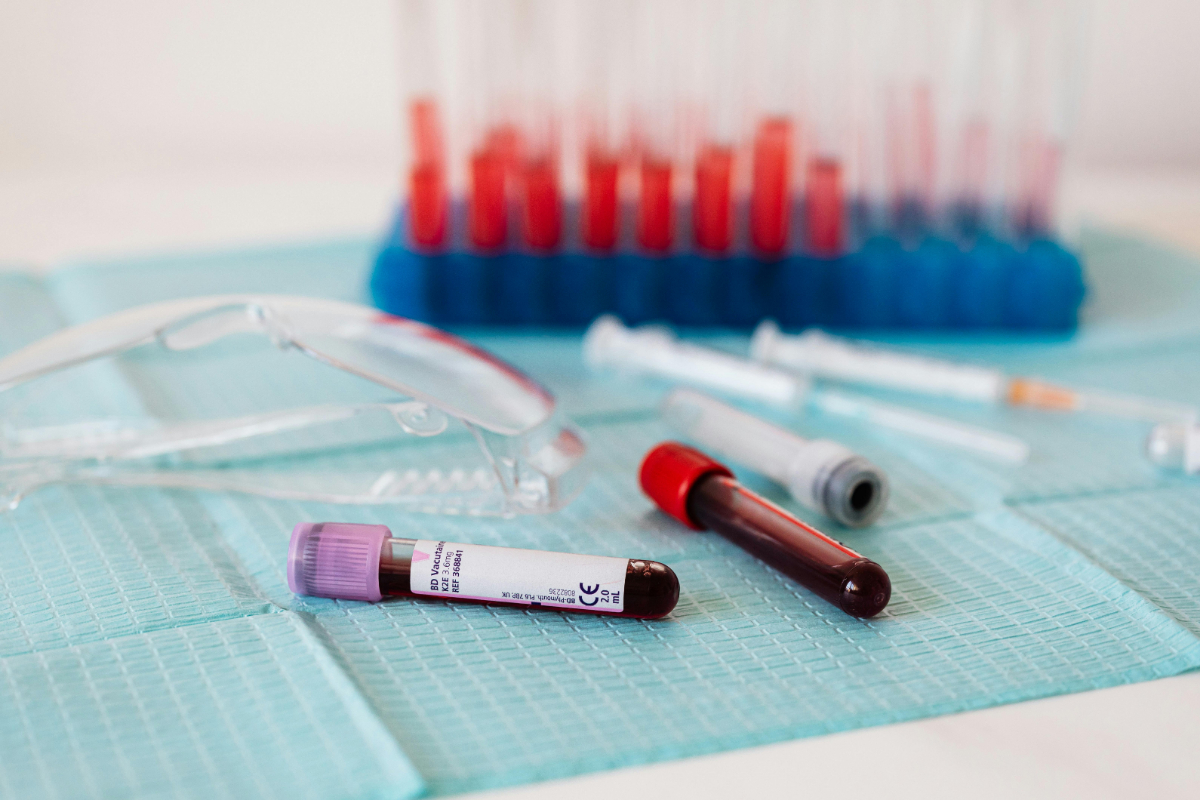
A total white blood cell (WBC) count tells you how many immune cells are circulating in your blood. But it is the WBC differential that tells you which types of immune cells are elevated or depleted — and that distinction is critical. A high WBC from neutrophils suggests a bacterial infection; the same total WBC driven by lymphocytes points toward a virus. Identical number, entirely different clinical meaning.
This guide walks through all five white blood cell types measured in a standard differential, explains their normal ranges according to international standards (CLSI/WHO), and clarifies what shifts in each fraction may indicate.
Disclaimer: This article is for educational purposes only and does not replace professional medical advice. Always consult a qualified healthcare provider for diagnosis and treatment.
What Is a WBC Differential?
When your doctor orders a complete blood count (CBC), the lab report typically includes two things related to white blood cells:
- Total WBC count — the aggregate number of all white cells per microliter of blood.
- WBC differential — a percentage (and often absolute count) breakdown of the five major types of white blood cells.
Modern hematology analyzers at labs like Quest Diagnostics, LabCorp, and Synlab perform the differential automatically using laser scatter and fluorescent staining. When abnormal cells are detected, a trained technologist reviews the blood smear manually under a microscope.
The five cell types in a standard differential are:
| Cell Type |
Typical Range (%) |
Typical Absolute Range (cells/mcL) |
| Neutrophils |
40-70% |
1,800 - 7,700 |
| Lymphocytes |
20-40% |
1,000 - 4,800 |
| Monocytes |
2-8% |
100 - 800 |
| Eosinophils |
1-4% |
15 - 500 |
| Basophils |
0-1% |
0 - 200 |
Note: Percentages must always be interpreted alongside absolute counts. A percentage can appear "high" simply because another cell type is depleted (relative vs. absolute changes).
Total WBC Count: The Starting Point
Before diving into the differential, a quick refresher on the total count:
- Normal adult range: 4,000 - 11,000 cells/mcL (4.0 - 11.0 x 10^9/L).
- Leukocytosis (elevated WBC): most commonly caused by infection, inflammation, stress, corticosteroid use, or smoking.
- Leukopenia (low WBC): seen with viral infections, bone marrow suppression, autoimmune conditions, or certain medications.
A total count outside the normal range is a signal. The differential tells you where the signal is coming from.
Neutrophils: The First Responders
Neutrophils are the most abundant white blood cells and the body's primary defense against bacterial and fungal infections. They are the first cells to arrive at a site of infection, where they engulf and destroy pathogens through phagocytosis.
Normal Range
- Percentage: 40-70%
- Absolute count: 1,800 - 7,700 cells/mcL
High Neutrophils (Neutrophilia)
An elevated neutrophil count is one of the most common findings in blood work. Causes include:
- Bacterial infections — pneumonia, urinary tract infection, appendicitis, cellulitis. This is the classic and most frequent reason.
- Acute inflammation — pancreatitis, burns, tissue injury, post-surgical recovery.
- Stress response — physical or emotional stress causes cortisol-mediated release of neutrophils from the bone marrow reserve.
- Medications — corticosteroids (prednisone) are a well-known cause of neutrophilia.
- Smoking — chronic smokers often have a baseline neutrophil count 20-25% above non-smokers. More on this in our article on nicotine and alcohol effects on blood tests.
"Left shift" — when immature neutrophils (bands, metamyelocytes) appear in the blood, it means the bone marrow is urgently releasing cells to fight a severe infection. This is always worth discussing with your doctor.
Low Neutrophils (Neutropenia)
- Viral infections — influenza, HIV, hepatitis, EBV can suppress neutrophil production.
- Medications — chemotherapy, certain antibiotics (e.g., trimethoprim-sulfamethoxazole), antithyroid drugs.
- Autoimmune neutropenia — the immune system attacks its own neutrophils.
- Bone marrow failure — aplastic anemia or marrow infiltration by cancer.
Neutropenia below 500 cells/mcL is severe and places the patient at high risk of life-threatening infections.
For a deeper look at neutrophil changes, see our dedicated guide on neutrophils high and low.
Lymphocytes: The Adaptive Immune System
Lymphocytes are responsible for targeted immune responses — they recognize specific viruses, produce antibodies, and maintain immunological memory. There are three main subtypes (T cells, B cells, and natural killer cells), though a standard differential reports them as a single group.
Normal Range
- Percentage: 20-40%
- Absolute count: 1,000 - 4,800 cells/mcL
High Lymphocytes (Lymphocytosis)
- Viral infections — the most common cause. Flu, mononucleosis (EBV), cytomegalovirus (CMV), hepatitis, and COVID-19 can all elevate lymphocytes.
- Chronic lymphocytic leukemia (CLL) — in older adults, persistently elevated lymphocytes (often above 5,000-10,000) may indicate CLL. This is usually discovered incidentally on routine blood work.
- Pertussis (whooping cough) — a classic cause of extreme lymphocytosis, especially in children.
- Chronic inflammation — autoimmune conditions like Crohn's disease or rheumatoid arthritis.
Low Lymphocytes (Lymphopenia)
- HIV/AIDS — progressive destruction of CD4+ T lymphocytes.
- Corticosteroid therapy — steroids cause lymphocytes to redistribute from the blood into tissues.
- Severe sepsis — overwhelming infection can deplete lymphocytes.
- Autoimmune conditions — lupus can cause lymphopenia.
For more on lymphocyte changes, read our article on lymphocyte count high and low.
Monocytes: The Cleanup Crew
Monocytes are the largest white blood cells. After circulating in the blood for 1-3 days, they migrate into tissues and transform into macrophages — cells that engulf dead cells, debris, and pathogens. They also present antigens to lymphocytes, bridging innate and adaptive immunity.
Normal Range
- Percentage: 2-8%
- Absolute count: 100 - 800 cells/mcL
High Monocytes (Monocytosis)
- Chronic infections — tuberculosis, endocarditis, syphilis, and fungal infections.
- Recovery phase — monocytes often rise during the convalescent phase of an acute infection. If you had a bad cold last week and your monocytes are up this week, it may simply reflect healing.
- Inflammatory bowel disease — Crohn's disease and ulcerative colitis.
- Certain cancers — chronic myelomonocytic leukemia (CMML), Hodgkin lymphoma.
For detailed coverage, see our article on monocytes high causes.
Low Monocytes (Monocytopenia)
Isolated low monocytes are uncommon and less clinically significant. They can occur with:
- Bone marrow failure (aplastic anemia).
- Hairy cell leukemia (a rare blood cancer).
- Acute stress or corticosteroid use.
Eosinophils: Allergy and Parasite Markers
Eosinophils play a specialized role in fighting parasitic infections and mediating allergic reactions. They release toxic granules that destroy parasites but can also cause tissue damage in allergic and asthmatic conditions.
Normal Range
- Percentage: 1-4%
- Absolute count: 15 - 500 cells/mcL
High Eosinophils (Eosinophilia)
- Allergic conditions — asthma, allergic rhinitis, eczema, food allergies. The most common cause in developed countries.
- Parasitic infections — hookworm, roundworm, schistosomiasis. A key consideration for travelers returning from endemic areas.
- Drug reactions — eosinophilia can signal an adverse drug reaction (e.g., certain antibiotics, anticonvulsants).
- Eosinophilic GI disorders — eosinophilic esophagitis, increasingly recognized in both children and adults.
- Hypereosinophilic syndrome — a rare condition where eosinophils are persistently above 1,500/mcL and cause organ damage.
Low Eosinophils
Eosinophils are normally present in small numbers, so low counts are rarely clinically significant. Acute stress and corticosteroid therapy can suppress them temporarily.
For more detail, read our guide on eosinophils and basophils in allergy and parasitic conditions.
Basophils: The Rarest White Blood Cell
Basophils are the least common white blood cell type, typically making up less than 1% of the total WBC count. They participate in immediate allergic reactions by releasing histamine and heparin.
Normal Range
- Percentage: 0-1%
- Absolute count: 0 - 200 cells/mcL
High Basophils (Basophilia)
Elevated basophils are uncommon and noteworthy:
- Myeloproliferative disorders — chronic myeloid leukemia (CML) is the most important cause. Persistent basophilia should prompt further investigation.
- Allergic reactions — basophils participate in IgE-mediated responses.
- Hypothyroidism — mild basophilia is sometimes observed.
- Inflammatory conditions — ulcerative colitis, rheumatoid arthritis.
Low Basophils
Because the normal range already extends to zero, low basophils are generally not clinically meaningful.
How to Read the Differential: Patterns That Matter
The real power of the WBC differential lies in recognizing patterns — combinations of changes that point toward specific conditions:
| Pattern |
Likely Direction |
| High neutrophils + low lymphocytes |
Bacterial infection, stress response |
| Low neutrophils + high lymphocytes |
Viral infection |
| High eosinophils + normal others |
Allergic condition or parasites |
| All cell types low (pancytopenia) |
Bone marrow failure, consider CBC cancer screening discussion |
| Very high WBC + blasts on smear |
Acute leukemia — urgent referral |
| High monocytes + recovering patient |
Post-infection recovery phase |
These patterns are what trained hematologists and AI-powered analysis tools look for. A single abnormal number is often less important than the overall constellation.
Factors That Affect Your WBC Differential
Several non-disease factors can shift your differential and create misleading results:
- Time of day — WBC counts are naturally higher in the late afternoon.
- Food intake — eating triggers mild, transient leukocytosis (postprandial leukocytosis). Always fast before blood work.
- Exercise — strenuous physical activity mobilizes neutrophils and lymphocytes into the bloodstream temporarily.
- Stress — both physical and emotional stress cause neutrophilia via cortisol release.
- Medications — corticosteroids raise neutrophils and lower lymphocytes; chemotherapy lowers everything.
- Smoking and alcohol — both chronically alter the differential. See our article on how nicotine and alcohol affect blood tests.
- Pregnancy — physiological leukocytosis (mainly neutrophilia) is normal. Learn more in our guide on CBC in women during pregnancy and menopause.
When to See a Doctor
A WBC differential is a screening tool, not a standalone diagnosis. Consult a physician if:
- Your total WBC is below 2,000 or above 20,000 without an obvious explanation (no recent infection, surgery, or medication change).
- Blast cells or other immature forms are noted on the report — this is always urgent.
- You have persistent neutropenia (especially below 1,000) — infection risk is significantly elevated.
- Eosinophils are persistently above 1,500 — this may indicate an eosinophilic disorder requiring specialist evaluation.
- Abnormal values are accompanied by unexplained weight loss, night sweats, recurrent infections, or swollen lymph nodes.
Frequently Asked Questions
What is the difference between WBC count and WBC differential?
The WBC count is a single number — the total number of all white blood cells. The differential breaks that number down into the five cell types (neutrophils, lymphocytes, monocytes, eosinophils, basophils), showing how many of each are present. Both are included in a CBC with differential.
Can stress alone cause an abnormal differential?
Yes. Acute stress (physical or emotional) triggers cortisol release, which pushes neutrophils up and lymphocytes down. This so-called "stress leukocytosis" is transient and resolves once the stressor is removed. It is one reason labs recommend resting quietly for 10-15 minutes before a blood draw.
My eosinophils are at 5% — should I be worried?
Mildly elevated eosinophils (5-7%) are common in people with allergies, asthma, or seasonal hay fever. If you have no symptoms and no history of parasitic exposure, it is usually not concerning. Persistent elevation above 10% or above 1,500 cells/mcL warrants investigation.
Does a normal WBC differential rule out cancer?
Not entirely. Many solid tumors (breast, lung, colon) do not alter the WBC differential until advanced stages. However, blood cancers like leukemia and lymphoma typically produce striking abnormalities. Read more in our article on whether a CBC can detect cancer.
This article is for informational purposes only. Diagnosis and treatment decisions should always be made by a licensed healthcare professional.
Want a clearer picture of your immune health? Upload your lab report at evallume.com and receive an AI-powered interpretation in minutes.