A CBC with differential is the most comprehensive version of the standard complete blood count. While a basic CBC gives you total counts for red cells, white cells, and platelets, the "with differential" version adds a full breakdown of white blood cell subtypes plus red cell indices that reveal the size, color, and uniformity of your red blood cells. It is, in effect, a panoramic snapshot of your blood.
This guide walks through every section of a CBC with differential report — red blood cells, white blood cells, platelets, and derived indices — explaining what each value means, what normal ranges look like, and what patterns suggest specific conditions.
Disclaimer: This article is for educational purposes only and does not replace professional medical advice. Always consult a qualified healthcare provider for diagnosis and treatment.
What Makes a "CBC with Differential" Different from a Basic CBC?
At labs like Quest Diagnostics, LabCorp, and Synlab, ordering a "CBC with differential" (sometimes abbreviated CBC w/ diff) automatically includes:
- Red blood cell parameters: RBC count, hemoglobin, hematocrit, and the red cell indices (MCV, MCH, MCHC, RDW).
- White blood cell parameters: Total WBC count plus a percentage and absolute count of neutrophils, lymphocytes, monocytes, eosinophils, and basophils.
- Platelet parameters: Platelet count, MPV (mean platelet volume), and sometimes platelet distribution width (PDW).
A basic CBC may omit the white cell differential and some indices. The "with differential" version is what most physicians order when they need a thorough evaluation — it is the standard for annual health checkups, pre-surgical clearance, and any workup for symptoms like fatigue, fever, or unexplained bruising.
Section 1: Red Blood Cells — Oxygen Transport
Red blood cells (RBCs, erythrocytes) carry oxygen from the lungs to every tissue in the body. When their numbers or composition are abnormal, the effects ripple through every organ system.
RBC Count
- Normal range (adult): Males 4.5 - 5.5 million/mcL; Females 4.0 - 5.0 million/mcL
- High: Polycythemia (overproduction), dehydration, chronic lung disease, living at high altitude.
- Low: Anemia from many possible causes — iron deficiency, B12 deficiency, chronic disease, blood loss, bone marrow suppression.
Hemoglobin (Hb / HGB)
The protein inside red blood cells that binds oxygen.
- Normal range: Males 13.5 - 17.5 g/dL (135 - 175 g/L); Females 12.0 - 16.0 g/dL (120 - 160 g/L)
- Low hemoglobin is the defining feature of anemia. The degree of reduction often correlates with symptom severity: mild fatigue at 10-12 g/dL, significant pallor and weakness at 8-10 g/dL, and potentially dangerous levels below 7 g/dL.
- High hemoglobin can indicate polycythemia vera, chronic hypoxia (COPD, sleep apnea), or simply dehydration.
Hematocrit (HCT)
The percentage of blood volume occupied by red blood cells.
- Normal range: Males 38.3 - 48.6%; Females 35.5 - 44.9%
- Hematocrit tracks closely with hemoglobin. It is particularly useful for detecting dehydration (high hematocrit) or hemodilution (low hematocrit, common in pregnancy).
Red Cell Indices — The Anemia Detectives
These calculated values are the most powerful tools on a CBC for classifying the type of anemia. For a deep dive, see our dedicated article on MCV, MCH, MCHC, and RDW.
MCV (Mean Corpuscular Volume) — the average size of a red blood cell.
- Normal: 80 - 100 fL
- Low MCV (microcytic): classic for iron-deficiency anemia and thalassemia trait.
- High MCV (macrocytic): classic for vitamin B12 or folate deficiency, alcohol use, and some medications.
MCH (Mean Corpuscular Hemoglobin) — the average amount of hemoglobin per red blood cell.
- Normal: 27 - 33 pg
- Tracks alongside MCV. Low MCH = pale, small cells (hypochromic microcytic anemia).
MCHC (Mean Corpuscular Hemoglobin Concentration) — the average concentration of hemoglobin within red blood cells.
- Normal: 32 - 36 g/dL
- Low MCHC confirms hypochromic anemia. Very high MCHC can suggest spherocytosis (a hereditary red cell membrane disorder).
RDW (Red Cell Distribution Width) — measures how variable your red blood cells are in size.
- Normal: 11.5 - 14.5%
- High RDW means the red cells are different sizes (anisocytosis). Early iron deficiency often shows a high RDW before the MCV drops. Combined iron and B12 deficiency also produces high RDW.
Pattern Recognition: Using Indices to Classify Anemia
| MCV |
RDW |
Most Likely Diagnosis |
| Low |
Normal |
Thalassemia trait |
| Low |
High |
Iron-deficiency anemia |
| Normal |
Normal |
Anemia of chronic disease |
| Normal |
High |
Mixed deficiency, early iron deficiency |
| High |
Normal |
Aplastic anemia, liver disease |
| High |
High |
B12 or folate deficiency |
Section 2: White Blood Cells — The Immune Army
The white blood cell (WBC) section of a CBC with differential provides both a total count and a breakdown into five cell types. For a comprehensive walkthrough of each type, see our WBC differential interpretation guide.
Total WBC Count
- Normal range: 4,000 - 11,000 cells/mcL (4.0 - 11.0 x 10^9/L)
The Five White Cell Types
Neutrophils (40-70%): Frontline defense against bacteria. Elevated in bacterial infections, stress, corticosteroid use. Low (neutropenia) in viral infections, bone marrow suppression, certain medications. See neutrophils high and low.
Lymphocytes (20-40%): Key players in viral defense and adaptive immunity. Elevated in viral infections (mono, flu, hepatitis), chronic lymphocytic leukemia. Low in HIV, immunosuppression. See lymphocyte count high and low.
Monocytes (2-8%): Tissue cleanup and antigen presentation. Elevated in chronic infections (TB, endocarditis), recovery phases, inflammatory bowel disease. See monocytes high causes.
Eosinophils (1-4%): Allergy and parasite response. Elevated in allergic conditions, parasitic infections, drug reactions. See eosinophils and basophils guide.
Basophils (0-1%): Least common; involved in immediate allergic reactions. Persistent elevation may warrant investigation for myeloproliferative disorders.
Key WBC Patterns
- Neutrophil-dominant elevation: Think bacterial. Pneumonia, UTI, appendicitis, post-surgical.
- Lymphocyte-dominant elevation: Think viral. Flu, mono, hepatitis, COVID-19.
- Eosinophil spike with normal rest: Think allergy or parasites.
- All lines suppressed (pancytopenia): Think bone marrow problem — aplastic anemia, leukemia, medication toxicity.
- "Left shift": Immature neutrophils (bands) appearing in blood — severe bacterial infection requiring urgent marrow mobilization.
Section 3: Platelets — Clotting Control
Platelets (thrombocytes) are cell fragments essential for blood clotting. They form the initial plug at wound sites and interact with clotting factors to create stable clots.
Platelet Count (PLT)
- Normal range: 150,000 - 400,000/mcL (150 - 400 x 10^9/L)
High platelets (thrombocytosis):
- Reactive: infection, inflammation, iron deficiency, post-surgery, post-splenectomy.
- Primary: myeloproliferative disorders (essential thrombocythemia).
- Persistently elevated platelets above 450,000 warrant further investigation. See our platelet count guide.
Low platelets (thrombocytopenia):
- Immune thrombocytopenic purpura (ITP).
- Viral infections (hepatitis C, HIV, EBV).
- Medications (heparin-induced thrombocytopenia).
- Pregnancy-related (gestational thrombocytopenia).
- Bone marrow failure.
MPV (Mean Platelet Volume)
- Normal range: 7.5 - 11.5 fL
- High MPV suggests young, large platelets are being released (the marrow is compensating for destruction). Low MPV may indicate marrow suppression.
Section 4: ESR — The Inflammation Alarm (When Included)
Some labs include ESR (erythrocyte sedimentation rate) as part of an extended CBC panel. It is not specific — it rises in infection, inflammation, autoimmune disease, cancer, and even pregnancy — but extremely elevated ESR (above 50 mm/hr) without a clear cause always warrants investigation. For more, see our guide on high ESR causes.
How to Read Your Report: A Step-by-Step Approach
When you receive your CBC with differential, here is a systematic way to interpret it:
Step 1 — Check hemoglobin and hematocrit. Are they low (anemia)? Are they high (polycythemia or dehydration)?
Step 2 — If anemia is present, look at MCV and RDW. Low MCV points toward iron deficiency or thalassemia. High MCV suggests B12/folate deficiency. RDW helps distinguish further.
Step 3 — Check total WBC. High or low? Then look at the differential to identify which cell type is driving the change.
Step 4 — Check platelets. Very low (below 100,000) increases bleeding risk. Very high (above 450,000) needs investigation.
Step 5 — Look for flags. Lab reports often flag abnormal values with "H" (high) or "L" (low). Pay special attention to any notation about "blasts," "atypical lymphocytes," or "left shift."
Step 6 — Consider context. Are you pregnant? Did you exercise heavily before the draw? Are you on medications? Context can explain many borderline abnormalities.
Common Questions About CBC with Differential
How is the blood drawn?
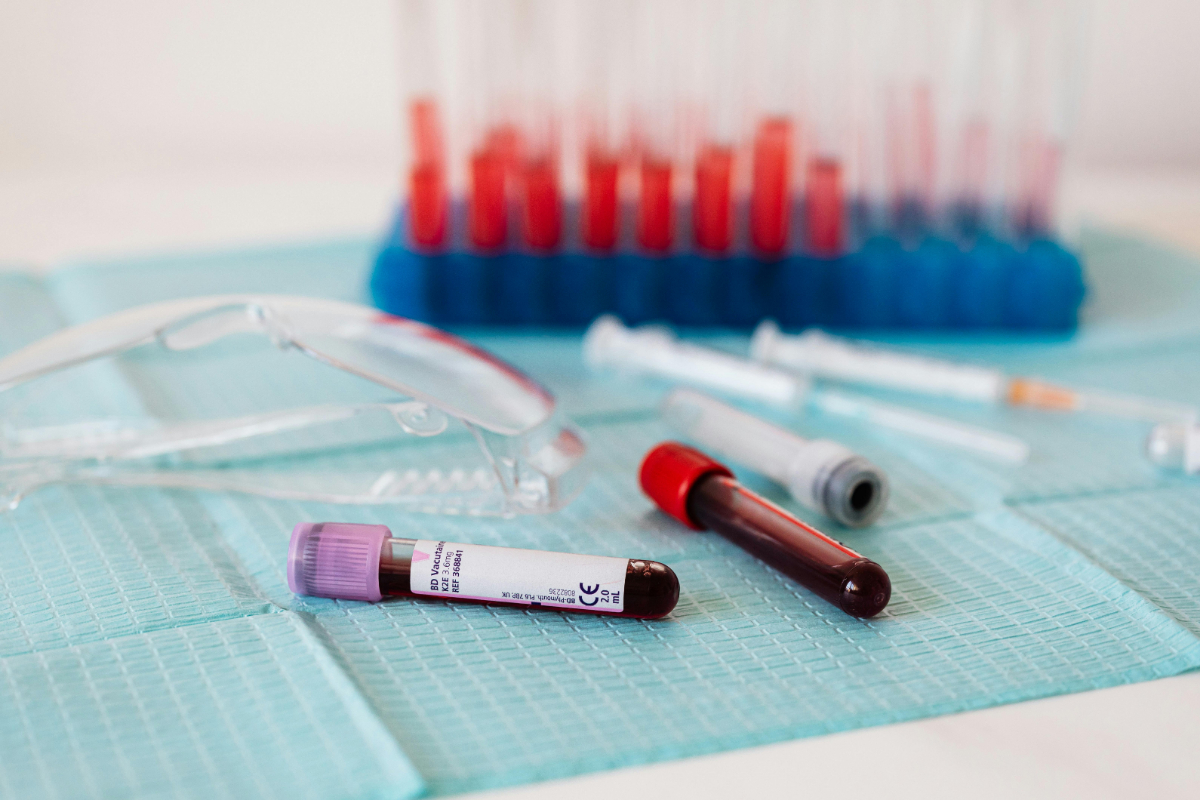
A standard venous blood draw into a lavender-top EDTA tube. Results are typically available within 24 hours at most commercial labs.
Should I fast before a CBC with differential?
Most guidelines recommend an 8-12 hour fast. While the CBC itself is less food-sensitive than chemistry panels, eating can cause transient leukocytosis (a temporary rise in WBC) and lipemia (cloudy plasma) that may interfere with automated counting.
How often should I get a CBC with differential?
For healthy adults: annually as part of a routine checkup. More frequently if you have a chronic condition, are on medications that affect blood counts, or are being monitored for a known blood disorder.
What does it cost?
In the US, a CBC with differential typically costs $15-$50 without insurance at Quest or LabCorp. With insurance, it is almost always covered as a preventive screening test. In Europe, it is covered under standard healthcare when ordered by a physician.
Can a CBC with differential detect cancer?
It can detect blood cancers (leukemia, lymphoma) that directly alter blood cell counts and morphology. For solid tumors, CBC changes are indirect and usually appear late. A normal CBC does not rule out cancer. Read our detailed discussion on whether a CBC can detect cancer.
When to See a Doctor
Seek medical attention promptly if your CBC with differential shows:
- Hemoglobin below 8 g/dL or rapidly declining.
- WBC below 2,000 or above 30,000 without obvious cause.
- Platelet count below 50,000 (bleeding risk) or above 1,000,000.
- Any mention of blast cells, atypical lymphocytes, or nucleated red blood cells.
- Multiple abnormal values across different cell lines (pancytopenia or bicytopenia).
Even mild abnormalities deserve a follow-up conversation with your doctor if they are new, unexplained, or persistent across two or more tests.
This article is for informational purposes only. Diagnosis and treatment decisions should always be made by a licensed healthcare professional.
Curious about your results? Upload your CBC with differential report at evallume.com for a clear, AI-powered interpretation in minutes.