Few lab values generate as much confusion as the ESR — erythrocyte sedimentation rate, also called the "sed rate." It is one of the oldest tests in laboratory medicine (introduced nearly a century ago), yet it remains a fixture on modern blood panels. When the number comes back elevated, patients often assume the worst, and the internet rarely helps calm those fears.
The truth is that ESR is a deliberately vague test. It does not point to a specific disease. Instead, it acts like a smoke alarm: it tells you something may be smoldering inside the body, but it cannot tell you which room is on fire — or whether someone simply burned toast. Understanding what ESR measures, why it rises, and what the elevation actually means in context will help you interpret your results without unnecessary anxiety.
Disclaimer: This article is for educational purposes only and does not replace professional medical advice. Always consult a qualified healthcare provider for diagnosis and treatment.
What Is ESR and How Is It Measured?
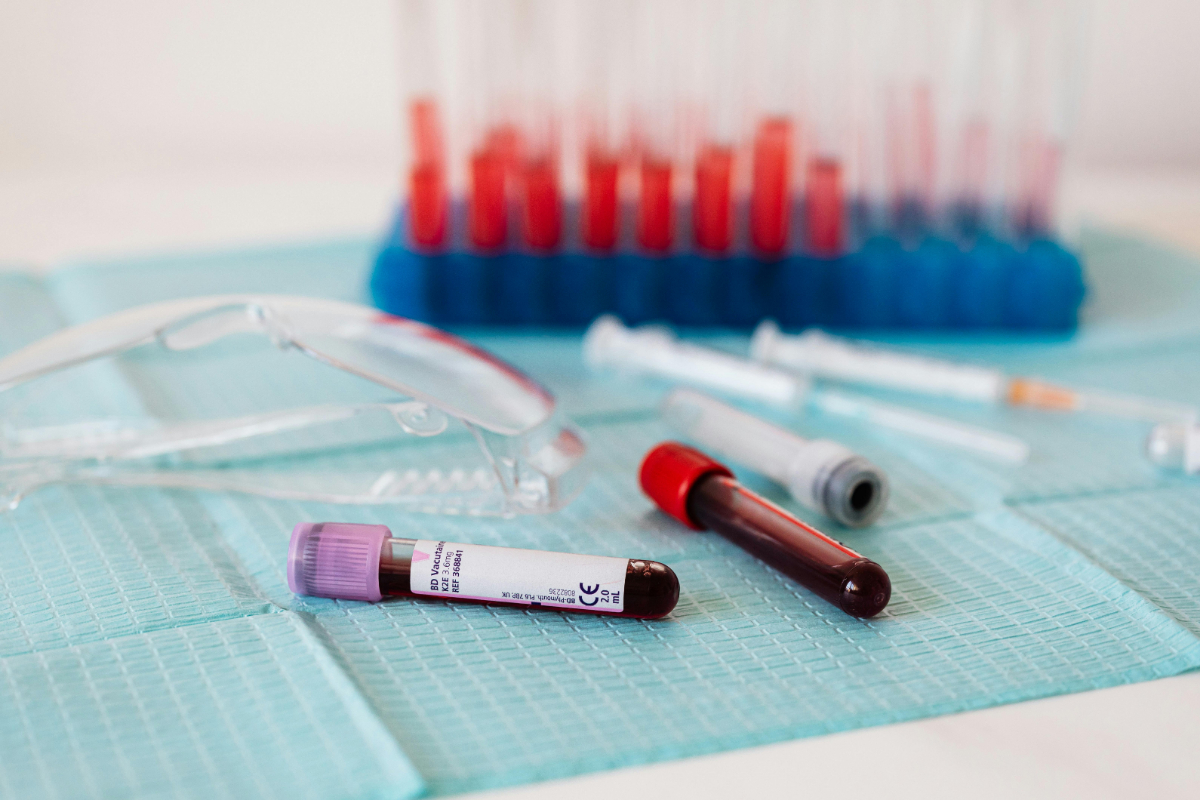
The test itself is remarkably simple. A tube of blood treated with an anticoagulant is placed upright and left undisturbed for exactly one hour. Red blood cells (erythrocytes), being heavier than plasma, gradually sink toward the bottom of the tube. The ESR is the distance — measured in millimeters — that the red cells travel in that hour.
In healthy blood, individual red cells carry a negative surface charge that causes them to repel each other, so they settle slowly. But when inflammation is present, the liver produces increased amounts of acute-phase proteins — especially fibrinogen, immunoglobulins, and C-reactive protein (CRP). These proteins coat the red cells, neutralize their surface charge, and cause them to clump together into stacks called rouleaux (think of a roll of coins). These heavier stacks fall faster, and the ESR reading goes up.
Two measurement methods exist:
- Westergren method — the international gold standard recommended by CLSI and WHO. Uses a 200 mm graduated tube.
- Wintrobe method — older and less common in modern labs.
Most major labs (Quest Diagnostics, LabCorp, Synlab) use the Westergren method or an automated equivalent that produces comparable results.
Normal ESR Ranges
ESR reference intervals depend on age and sex. Women typically have slightly higher ESR than men due to hormonal differences, lower hematocrit, and cyclical physiological variation.
| Group |
Normal Range (Westergren) |
| Men under 50 |
0–15 mm/hr |
| Men over 50 |
0–20 mm/hr |
| Women under 50 |
0–20 mm/hr |
| Women over 50 |
0–30 mm/hr |
| Children (1–14 years) |
2–13 mm/hr |
| Newborns |
0–2 mm/hr |
A widely used rule of thumb for upper normal limits:
- Men: Age divided by 2
- Women: (Age + 10) divided by 2
For example, the upper limit for a healthy 60-year-old man would be roughly 30 mm/hr, and for a 60-year-old woman roughly 35 mm/hr.
Important: ESR gradually increases with age in nearly everyone. A reading of 25 mm/hr in a 70-year-old is far less concerning than the same reading in a 25-year-old.
Benign Causes of Elevated ESR
A high ESR does not automatically mean disease. Numerous physiological and pre-analytical factors can push the number above the reference range without any pathology being present.
Pregnancy
During pregnancy — particularly in the second and third trimesters — fibrinogen levels rise dramatically as part of normal maternal adaptation. ESR values of 30–50 mm/hr (sometimes even higher) are expected and do not indicate infection or complications.
Menstrual Cycle
ESR can increase modestly around menstruation due to hormonal shifts and minor changes in plasma protein composition.
Obesity
Higher body mass is associated with a chronic low-grade inflammatory state (elevated fibrinogen, interleukins) that raises ESR independently of any acute illness.
Medications
- Oral contraceptives and hormone replacement therapy increase fibrinogen and ESR.
- High-dose aspirin and NSAIDs can paradoxically raise ESR in some individuals.
- Vitamin A supplements have been reported to elevate sedimentation rates.
Aging
As noted above, ESR drifts upward naturally with age. An isolated, mildly elevated ESR in an otherwise healthy older adult is rarely clinically meaningful.
Technical Factors
- Room temperature: If the lab tube was stored in a warm room, red cells settle faster, producing a falsely elevated result.
- Tilted tube: Even a few degrees of tilt from vertical accelerates sedimentation.
- Delay in processing: Samples tested more than two hours after collection may give inaccurate results.
Pathological Causes of High ESR
When benign explanations have been ruled out and the ESR is significantly or persistently elevated, the following categories account for the majority of cases.
1. Infections
This is the single most common pathological cause of elevated ESR. Bacterial infections tend to produce more dramatic elevations than viral ones:
- Bacterial infections (pneumonia, pyelonephritis, septic arthritis, dental abscess) → ESR often 40–100+ mm/hr.
- Viral infections (influenza, COVID-19, mild upper respiratory infections) → ESR usually rises modestly (20–40 mm/hr) and may lag several days behind symptom onset.
- Tuberculosis → Classically produces a persistently elevated ESR, often above 50 mm/hr, even when symptoms are subtle.
An elevated ESR alongside a high WBC count with a neutrophil shift strongly suggests an active bacterial process.
2. Autoimmune and Rheumatic Diseases
ESR is one of the hallmark laboratory markers for systemic autoimmune inflammation:
- Rheumatoid arthritis — ESR and CRP are used to calculate disease activity scores (DAS28).
- Systemic lupus erythematosus (SLE) — ESR is typically elevated, though CRP may remain normal (a distinctive pattern that helps distinguish lupus from bacterial infection).
- Polymyalgia rheumatica and giant cell arteritis — classically present with ESR above 50 mm/hr, often above 100 mm/hr. In fact, ESR above 100 is one of the diagnostic criteria.
- Ankylosing spondylitis, psoriatic arthritis, vasculitis.
If elevated ESR accompanies joint pain, morning stiffness, or unexplained rashes, see our blood tests for joint pain guide for next steps.
3. Tissue Injury and Surgery
Any event that causes significant tissue destruction — fractures, burns, myocardial infarction, or surgical procedures — triggers an acute-phase response. ESR typically peaks 3–5 days after the event and can remain elevated for several weeks during healing.
4. Malignancy
Certain cancers — especially lymphoma, multiple myeloma, and metastatic carcinomas — can produce markedly elevated ESR. Multiple myeloma is particularly noteworthy because the abnormal immunoglobulins it produces cause extreme rouleaux formation, pushing ESR above 100 mm/hr. However, a high ESR alone is never sufficient to diagnose cancer.
5. Kidney Disease
Chronic kidney disease alters plasma protein composition and reduces albumin, both of which accelerate erythrocyte sedimentation. Nephrotic syndrome, in particular, is associated with very high ESR values.
6. Anemia
This is an often-overlooked cause. When hemoglobin and hematocrit are low, there are fewer red cells to impede each other's fall, so they settle faster regardless of inflammation. An elevated ESR in the presence of anemia must be interpreted cautiously — the anemia itself may account for part or all of the elevation.
ESR vs CRP: Which Is Better?
ESR and CRP are both inflammatory markers, but they behave differently:
| Feature |
ESR |
CRP |
| Speed of response |
Slow — rises 24–48 hours after inflammation begins |
Fast — rises within 6–8 hours |
| Speed of normalization |
Slow — can remain elevated for weeks after recovery |
Fast — drops within 24–48 hours once inflammation resolves |
| Specificity |
Low — affected by age, sex, anemia, pregnancy |
Moderate — less affected by non-inflammatory factors |
| Best use |
Monitoring chronic inflammatory diseases over time |
Detecting acute infection or inflammation |
Because ESR is "slow to rise and slow to fall," it is better suited for tracking chronic conditions. CRP is preferred for detecting acute flare-ups or new infections. Many clinicians order both.
The "laboratory tail" phenomenon is worth understanding: after a successfully treated infection (antibiotics completed, fever resolved, symptoms gone), ESR may remain elevated for two to six weeks. Patients who recheck their labs too soon after recovery often panic at a still-elevated ESR — but this is entirely expected and does not mean the infection has returned.
Patterns to Watch For
As with every CBC parameter, context is everything:
- ESR high + WBC high + neutrophils high → Active bacterial infection most likely.
- ESR high + CRP normal + joint pain → Consider lupus (SLE), where CRP characteristically stays low.
- ESR very high (>100 mm/hr) → Narrow differential: multiple myeloma, temporal arteritis/polymyalgia rheumatica, severe infection, or metastatic cancer. Requires prompt investigation.
- ESR high + low hemoglobin → The anemia itself may be inflating the ESR. Correct the anemia and recheck.
- ESR mildly elevated + everything else normal → Likely a benign cause (age, obesity, recent mild illness). Recheck in 6–8 weeks.
When to See a Doctor
An isolated, mildly elevated ESR (e.g., 22 mm/hr in a 40-year-old woman) with no symptoms and a normal CBC with differential usually does not require urgent action. However, consult your physician if:
- ESR is persistently above 30 mm/hr (under 50) or above 40 mm/hr (over 50) on repeated testing.
- You have unexplained fever, weight loss, night sweats, or prolonged fatigue.
- ESR exceeds 50 mm/hr with no obvious explanation.
- You have joint pain, morning stiffness, or unexplained muscle aches.
- Other markers (CRP, WBC, platelet count) are also abnormal.
How to Prepare for an Accurate ESR Test
- Fast for 8–12 hours — eating raises fibrinogen and can elevate ESR.
- Avoid intense exercise for 24 hours — it causes transient inflammatory protein release.
- Inform the lab about pregnancy, oral contraceptives, or any anti-inflammatory medications.
- Morning draw is preferred for consistency across serial measurements.
Get Your Lab Results Explained
ESR is a valuable screening tool, but it was never designed to stand alone. It gains meaning only when read alongside your full CBC, CRP, WBC differential, and clinical symptoms. If your lab report has you worried and you want every value explained in plain language, upload your results at Evallume for an AI-powered interpretation that puts the complete picture together.
This article is for informational purposes only. It does not constitute medical advice, diagnosis, or treatment. Consult a healthcare professional for any medical concerns.