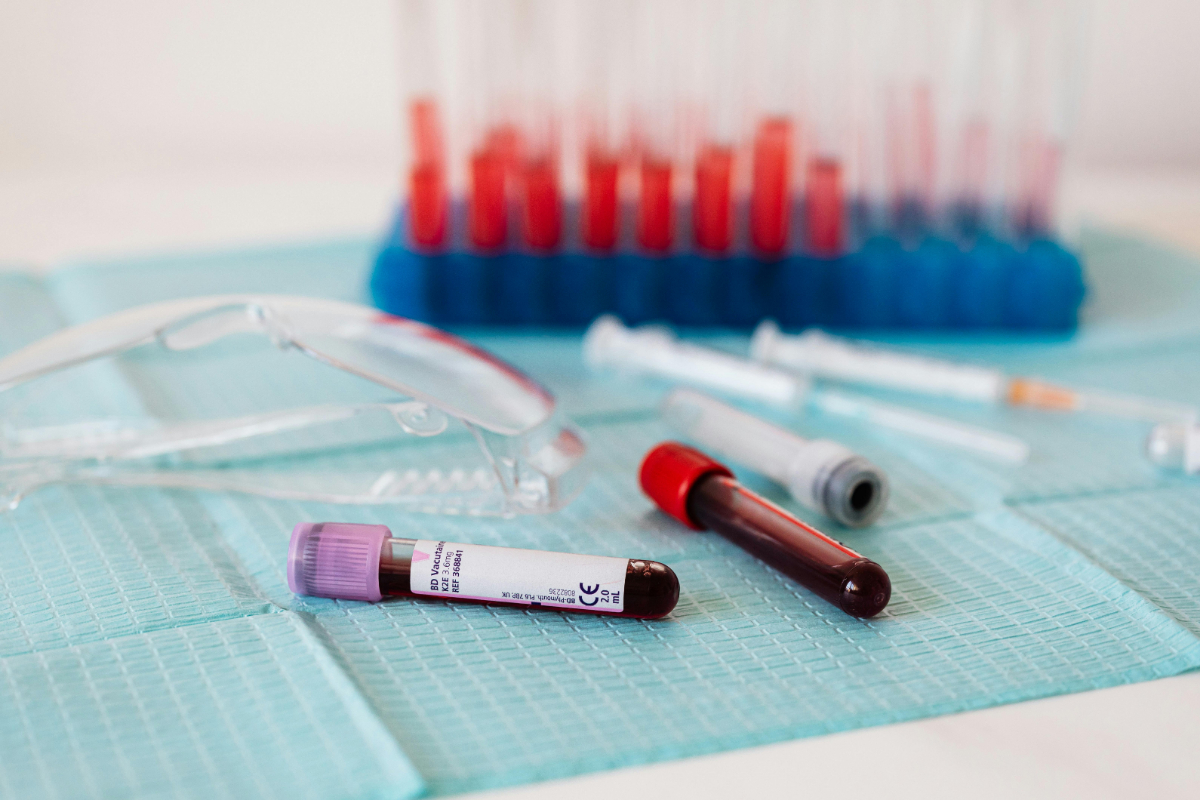
What Hemoglobin and Hematocrit Actually Measure
These two markers always appear together on a complete blood count (CBC) because they describe two sides of the same coin — your body's ability to deliver oxygen.
Hemoglobin (HGB) is the iron-containing protein inside each red blood cell. Its job is to pick up oxygen in the lungs and ferry it to every tissue, from your brain to your toes. Think of hemoglobin as the cargo carried by each delivery truck (red blood cell). When hemoglobin is low, cells throughout the body are starved of oxygen — a condition broadly known as anemia.
Hematocrit (HCT) is the percentage of your total blood volume that is occupied by red blood cells. Blood is a mix of liquid plasma and solid cells. If hematocrit is high, the blood is relatively thick — packed with cells and short on plasma. If hematocrit is low, the opposite is true: more plasma, fewer cells.
Because hemoglobin lives inside red blood cells, and hematocrit measures how much space those cells occupy, the two values almost always move in the same direction. A drop in one usually accompanies a drop in the other.
Normal Ranges by Age and Sex
Reference intervals can vary slightly between laboratories, but the values below align with WHO and CLSI guidelines and are used by major labs such as Quest Diagnostics, LabCorp, and Synlab.
Hemoglobin (HGB)
| Group |
Normal Range (g/dL) |
SI Equivalent (g/L) |
| Adult males |
13.5 – 17.5 g/dL |
135 – 175 g/L |
| Adult females |
12.0 – 16.0 g/dL |
120 – 160 g/L |
| Pregnant women |
11.0 – 14.0 g/dL |
110 – 140 g/L |
| Children (1 – 12 years) |
11.0 – 14.5 g/dL |
110 – 145 g/L |
| Newborns |
14.0 – 24.0 g/dL |
140 – 240 g/L |
Pregnancy causes a natural expansion of plasma volume, which dilutes hemoglobin concentration — this is physiological and expected.
Hematocrit (HCT)
| Group |
Normal Range (%) |
| Adult males |
38.3 – 48.6 % |
| Adult females |
35.5 – 44.9 % |
| Pregnant women |
30 – 40 % |
| Children (1 – 12 years) |
32 – 42 % |
| Newborns |
45 – 61 % |
Men tend to have higher values because of greater muscle mass and the oxygen-stimulating effect of testosterone. Newborn values are strikingly high and fall rapidly during the first months of life.
The Relationship Between HGB and HCT
A useful rule of thumb used by many clinicians is that hematocrit is roughly three times the hemoglobin value. For example, if your hemoglobin is 14.0 g/dL, you can expect a hematocrit of approximately 42%. This 1:3 ratio holds under normal conditions because each red blood cell contains a fairly predictable amount of hemoglobin.
When the ratio is disrupted — for instance, when hematocrit appears disproportionately high relative to hemoglobin — it may suggest the presence of abnormally shaped or sized red blood cells. Conditions such as spherocytosis, sickle cell trait, or severe iron deficiency can alter the relationship. This is one reason physicians look at red blood cell indices like MCV, MCH, and MCHC in addition to HGB and HCT.
It is also worth noting that certain laboratory situations can affect the accuracy of these measurements. Severe lipemia (high fat content in the blood sample, often from a non-fasting draw) can falsely elevate hemoglobin readings on automated analyzers. If your hemoglobin seems unexpectedly high relative to hematocrit, your physician may request a repeat fasting sample.
Low Hemoglobin and Hematocrit — The Main Causes
When both HGB and HCT fall below the reference range, the primary concern is anemia. According to the WHO, anemia affects roughly 1.8 billion people worldwide, making it one of the most common lab findings.
Anemia rarely appears overnight. It often develops gradually over months, and many people attribute their symptoms to stress or poor sleep rather than a measurable blood deficiency.
Symptoms That May Accompany Low Values
- Persistent fatigue that does not improve with rest — a pattern explored in detail in our guide on blood tests for chronic fatigue.
- Pale skin, especially noticeable on the inner eyelids and nail beds.
- Cold hands and feet even in warm environments.
- Hair thinning or increased shedding — see blood tests for hair loss for a deeper look.
- Shortness of breath during mild exertion such as climbing one flight of stairs.
- Dizziness or lightheadedness when standing up quickly.
Most Common Causes of Low Values
Iron deficiency is by far the leading cause. Without enough iron, the body cannot build hemoglobin molecules. Common scenarios include restrictive diets, heavy menstrual periods, gastrointestinal bleeding from ulcers, or chronic conditions that impair iron absorption. A ferritin and iron panel is typically the next step to confirm iron-deficiency anemia.
Vitamin B12 or folate deficiency can also impair red blood cell production. Without these vitamins, the bone marrow produces abnormally large, inefficient red blood cells — a condition called megaloblastic anemia. Vegetarians, vegans, and older adults with reduced stomach acid are at higher risk. A vitamin blood test panel can help identify these deficiencies.
Chronic disease. Conditions like chronic kidney disease, rheumatoid arthritis, and inflammatory bowel disease can suppress red blood cell production through inflammatory cytokines — often called "anemia of chronic disease."
Acute blood loss from trauma, surgery, or internal bleeding will drop hemoglobin and hematocrit rapidly. This is usually obvious from the clinical context but is worth mentioning because it requires urgent evaluation.
Thalassemia. This is a group of inherited disorders in which the body produces abnormal hemoglobin molecules. Thalassemia trait (the carrier form) is common in people of Mediterranean, South Asian, and Southeast Asian descent and typically causes a mild, lifelong anemia with small red blood cells (low MCV). It is often mistaken for iron deficiency — but iron supplementation will not help and may even be harmful if iron stores are actually normal. A hemoglobin electrophoresis test or genetic screening can confirm the diagnosis.
High Hemoglobin and Hematocrit — Should You Worry?
Elevated values can sound alarming because "thick blood" evokes images of clots, strokes, and heart attacks. In practice, though, the most frequent cause is entirely benign.
Common Causes of High Values
-
Dehydration. This is the number-one reason labs flag a high hematocrit. If you did not drink enough water before the blood draw, or if you were sweating heavily from exercise or hot weather, the liquid portion of your blood (plasma) shrinks. The same number of red blood cells is now suspended in less fluid, pushing the percentage upward. Rehydrating and repeating the test usually normalizes the result.
-
Smoking. Carbon monoxide from cigarette smoke binds to hemoglobin, blocking its ability to carry oxygen. The body compensates by producing extra red blood cells. Long-term smokers routinely show hemoglobin at the upper limit or slightly above. The effect of smoking and other substances on blood values is discussed in more detail in our article on nicotine and alcohol effects on blood tests.
-
Living at high altitude. Thinner air at elevation contains less oxygen. The body adapts by boosting red blood cell output — this is a normal physiological response seen in mountain communities worldwide.
-
Chronic lung or heart disease. Conditions like COPD, congestive heart failure, or congenital heart defects cause chronic low oxygen levels, triggering the kidneys to release more erythropoietin and stimulate red blood cell production.
-
Polycythemia vera. This is a rare bone marrow disorder in which the body produces too many red blood cells independent of oxygen demand. It requires specialized hematologic evaluation and long-term management. If your red blood cell count is also persistently elevated, your doctor may consider this possibility.
Why You Should Never Interpret One Value in Isolation
The biggest mistake patients make is reading a single flagged line and assuming the worst. A low hemoglobin number tells you that oxygen-carrying capacity is reduced, but it does not explain why. To pinpoint the cause, clinicians look at a cluster of related markers:
- Red blood cell indices — MCV, MCH, MCHC, and RDW reveal the size and hemoglobin content of individual cells, which helps classify the type of anemia.
- Reticulocyte count — shows whether the bone marrow is actively trying to produce new red blood cells or is suppressed. Learn more in our reticulocyte count guide.
- Iron studies — ferritin, serum iron, TIBC, and transferrin saturation separate iron-deficiency anemia from other types.
- Inflammatory markers — CRP and ESR can indicate whether a chronic inflammatory process is suppressing red blood cell production.
A high hematocrit also needs context. If platelets and the white blood cell count are also elevated, the pattern may suggest a myeloproliferative disorder rather than simple dehydration.
This is why a full CBC interpretation considers all parameters together — not one line at a time.
How Lifestyle and Preparation Affect Your Results
Several everyday factors can shift hemoglobin and hematocrit enough to push values outside the reference range on a single test — without reflecting any underlying disease.
Hydration status. This bears repeating because it is so common. Even mild dehydration — from skipping water the morning of a blood draw, vigorous exercise the night before, or a hot commute — can concentrate the blood and inflate hematocrit by several percentage points. If your hematocrit is mildly elevated and you were not well-hydrated, your doctor may simply ask you to drink water and retest.
Time of day. Hemoglobin and hematocrit tend to be slightly higher in the morning (when blood is more concentrated after overnight fasting) and slightly lower in the evening. Most labs calibrate their reference ranges for morning draws, so an afternoon sample may look artificially different.
Exercise. Intense endurance training causes plasma volume expansion (the "athlete's dilution"), which can lower both HGB and HCT even though the total number of red blood cells is normal or high. Distance runners and cyclists frequently show mildly low hemoglobin that does not represent true anemia.
Altitude. If you have recently traveled from sea level to a high-altitude location (or vice versa), your hemoglobin may be transiently elevated or reduced as the body adjusts to the new oxygen environment.
Menstruation. Women with heavy menstrual bleeding may see hemoglobin dip during or immediately after their period, then recover mid-cycle. For women evaluating changes over time, consistent timing relative to the menstrual cycle improves comparability. Our guide on CBC in women, pregnancy, and menopause explores these patterns.
When to See a Doctor
Most mild deviations in hemoglobin or hematocrit are not emergencies. However, you should seek prompt medical attention if:
- Hemoglobin is below 7 g/dL (70 g/L) — this level may require a transfusion.
- You experience severe dizziness, chest pain, or shortness of breath at rest.
- Values are persistently abnormal on repeat testing despite adequate hydration and nutrition.
- Both hemoglobin and hematocrit are very high with no obvious explanation such as altitude or dehydration.
Even if the deviation is mild, bringing it up at your next annual health checkup allows your physician to track trends over time — a single snapshot matters less than the direction of change.
Frequently Asked Questions
Can I raise my hemoglobin naturally without supplements?
In many cases, yes. If the cause is mild iron deficiency from diet, increasing intake of iron-rich foods (red meat, poultry, fish, lentils, fortified cereals) combined with vitamin C to improve absorption can gradually restore hemoglobin over several weeks to months. However, if hemoglobin is significantly low (below 10 g/dL) or the deficiency is caused by blood loss or malabsorption, dietary changes alone are unlikely to be sufficient, and your physician may recommend iron supplements or further investigation.
How often should I check hemoglobin and hematocrit?
For most healthy adults, a CBC during an annual health checkup is sufficient. If you have been diagnosed with anemia or are being treated for it, your physician may recommend rechecking every four to eight weeks until values stabilize. Pregnant women typically have hemoglobin checked at each trimester.
Is hemoglobin of 12.1 g/dL in a woman something to worry about?
A hemoglobin of 12.1 g/dL is within the normal reference range for adult women (12.0-16.0 g/dL). It is at the lower end, which means it bears watching — especially if previous values were higher. But on its own, it is not abnormal and does not require treatment.
Key Takeaways
- Hemoglobin measures how much oxygen your blood can carry; hematocrit measures what fraction of your blood is red blood cells.
- Low values most commonly point to iron deficiency or other types of anemia. High values are often caused by dehydration or smoking.
- A single flagged value is not a diagnosis. Proper interpretation requires looking at red blood cell indices, iron studies, and overall clinical context.
- Mild abnormalities frequently correct themselves once the underlying cause — diet, hydration, a recent illness — is addressed.
Trying to piece together what your hemoglobin and hematocrit results mean alongside the rest of your CBC? Our AI-powered analysis reads your full lab report in context — comparing HGB, HCT, red cell indices, iron markers, and inflammatory parameters together rather than one line at a time. Upload a photo or PDF of your lab report and receive a clear, plain-language interpretation in about one minute.
Get your lab results interpreted now